
Where Mindful Learning Begins
Where Mindful Learning Begins
Class 9 Science Exploration NCERT Solutions Chapter 3 (CBSE 2026-27) — every Think It Over, Inline, Activity, Pause & Ponder, Think as a Scientist, Revise Reflect Refine, and Quest Continues question on this one page, solved with the reasoning behind each answer.
Tissues in Action builds directly on Chapter 2's cell biology, moving from the individual cell to how groups of cells organise into plant tissues (meristematic and permanent) and animal tissues (epithelial, connective, muscular, and nervous). These NCERT solutions cover every tissue type, joint classification, and the totipotency experiments in detail — topics that appear consistently in Class 9 Science important questions and board-style case studies.
Tissues in Action moves up one level from Chapter 2 — instead of single cells, it looks at groups of cells organised into tissues, in both plants and animals. On the plant side, it covers meristematic tissue (the actively dividing zones that make growth possible) and the permanent tissues — simple (parenchyma, collenchyma, sclerenchyma) and complex (xylem, phloem) — that give plants their structure and transport systems. On the animal side, it covers the four fundamental tissue types — epithelial, connective, muscular and nervous — plus joints and body movement. The chapter closes with F.C. Steward's totipotency experiments, the science behind plant tissue culture. Every question is solved here, section by section, exactly as the textbook presents them.
Meristematic vs permanent tissue, why roots grow only at the tip, and how xylem and phloem move water and food.
Epithelial, connective, muscular and nervous tissue — plus joints, from hinge to ball-and-socket, and how they absorb impact.
F.C. Steward's carrot cell experiment, why plant cells can regenerate a whole organism when most animal cells cannot, and its real-world uses.
Answer: Understanding cells and tissues is fundamental to biology and medicine for several reasons:
The chapter itself illustrates this: F.C. Steward's totipotency experiments led to plant tissue culture technology, and crown gall disease research led to tools for genetic engineering.
Answer: Plant and animal tissues differ fundamentally in structure and function, driven by their different lifestyles:
| Feature | Plant tissues | Animal tissues |
|---|---|---|
| Cell wall | Present (cellulose) — gives rigidity | Absent — allows flexibility |
| Growth pattern | Localised (meristems at tips, sides, nodes) | Diffuse — growth throughout the body in young stages |
| Dividing tissue | Meristematic tissue (permanent growth zones) | No permanent growth zones in adults |
| Nutrition mode | Autotrophic — photosynthetic tissues (chlorenchyma) | Heterotrophic — digestive tissues |
| Movement | Mostly fixed; tissues provide support (collenchyma, sclerenchyma) | Can move; tissues provide locomotion (muscle) |
| Conducting tissue | Xylem (water) + phloem (food) — one-way transport | Blood — two-way transport via the heart |
| Main tissue types | Meristematic, protective, supporting, conducting | Epithelial, connective, muscular, nervous |
| Dead cells in function | Common (xylem vessels, sclerenchyma are dead but functional) | Rare — most functional cells are living |
Why: plants are fixed, so they need structural support (cell walls, sclerenchyma) and wide surface-area tissues for photosynthesis. Animals move, so they need flexible cells, muscles for movement, and nervous tissue for rapid response.
Answer: Division of labour means different parts of an organism specialise in different tasks, increasing overall efficiency — seen at every level of organisation:
Correlation: the more specialised a cell or tissue is, the better it performs its specific function, but the more dependent it becomes on other tissues. A neuron cannot feed itself — it depends on blood (connective tissue) for nutrition. This interdependence increases the efficiency of the whole organism.
Answer: Meristematic cells lack vacuoles because:
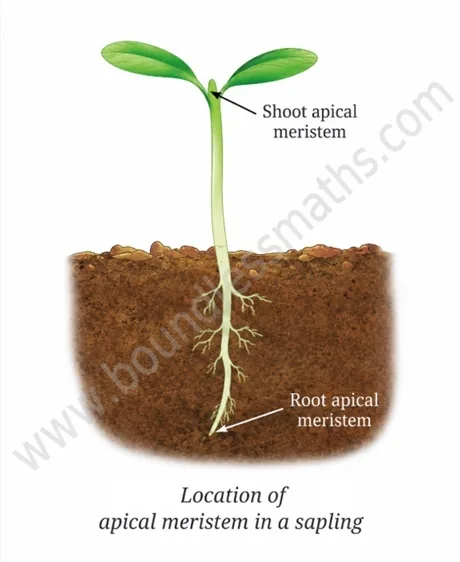
This is the same principle used in hedge trimming — cutting tips causes proliferation of branches and dense foliage.
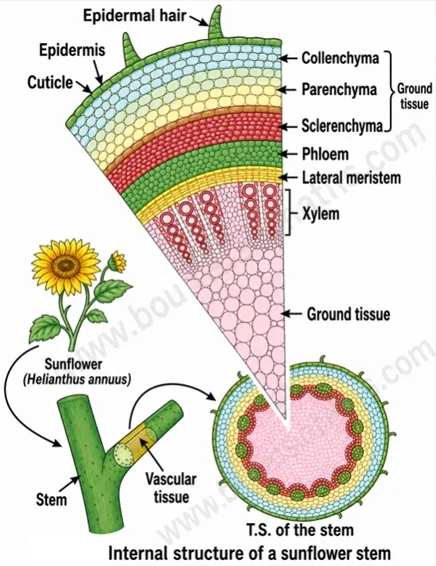
Answer: In a T.S. of sunflower stem (Fig. 3.7), the following tissues can be identified:
Differences: the cells vary in wall thickness (thin in parenchyma, unevenly thick in collenchyma, uniformly thick and lignified in sclerenchyma), cell size (xylem vessels are large and hollow), living state (xylem vessels/fibres are dead; phloem cells are living), and arrangement (epidermis is a single compact layer; ground tissue is loosely packed).
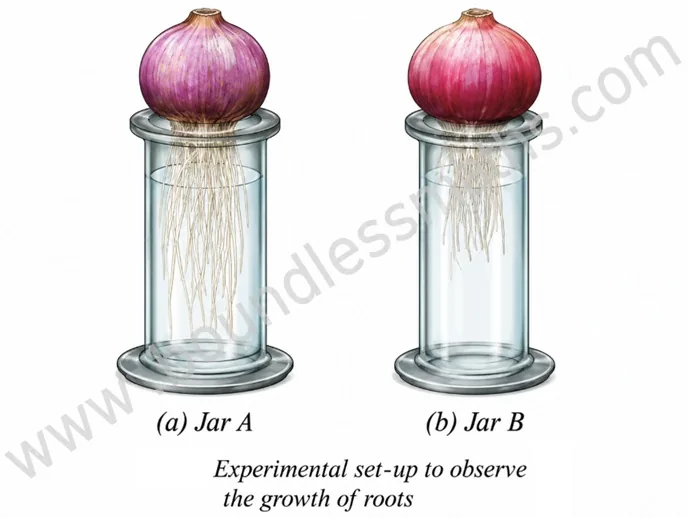
Table 3.1: Experimental data
| Experimental Jars | Length of onion root (cm) from the base of the bulb | ||||||
|---|---|---|---|---|---|---|---|
| Day 1 | Day 2 | Day 3 | Day 4 | Day 5 | Day 6 | Day 7 | |
| A | 0.3 | 0.8 | 2.3 | 3.2 | 4.0 | 4.9 | 5.8 |
| B | 0.3 | 0.7 | 2.1 | 2.8 | 2.1 | 2.1 | 2.1 |
Sample readings (in cm), matching the growth graph (Fig. 3.2) — your own measurements may vary slightly, but the pattern should match: Jar A keeps increasing every day, while Jar B tracks Jar A closely through Day 4, then drops and plateaus at around 2.1 cm from Day 5 onwards, once the cut tip stops adding new length.
Trend observed: Jar A roots grow continuously from day 1 to day 7. Jar B roots grow at the same rate as Jar A up to day 3; after the tips are cut on day 3, Jar B roots stop growing (length stays constant from day 4 onwards), while Jar A roots keep increasing in length.
Inference: roots grow only from their tips. The tip contains the apical meristem — a zone of actively dividing cells. When these cells are removed by cutting, growth stops completely, confirming that a root's growth zone is exclusively at the tip, not along its entire length.
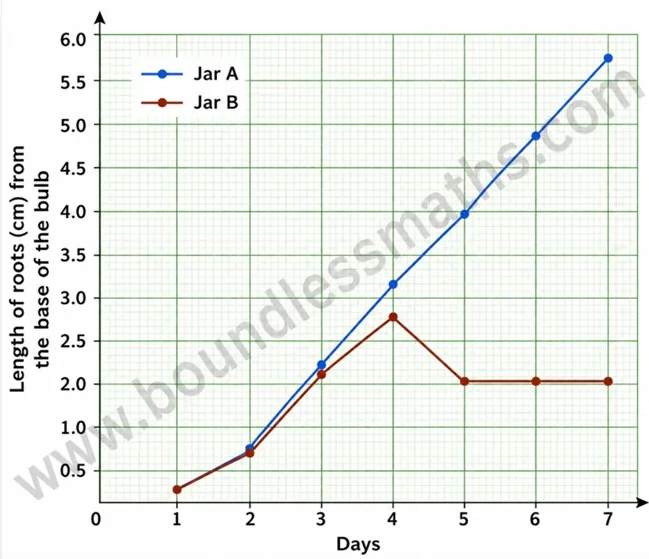
Answer: Yes, the observations should match Fig. 3.2. The graph shows Jar A as a continuously rising straight line (steady growth), and Jar B rising until day 3, then becoming flat (horizontal) after the tips are cut.
Inference: root growth occurs only at the root tip, which contains apical meristematic tissue with actively dividing cells. Removing the tip removes the source of new cells, permanently halting elongation.
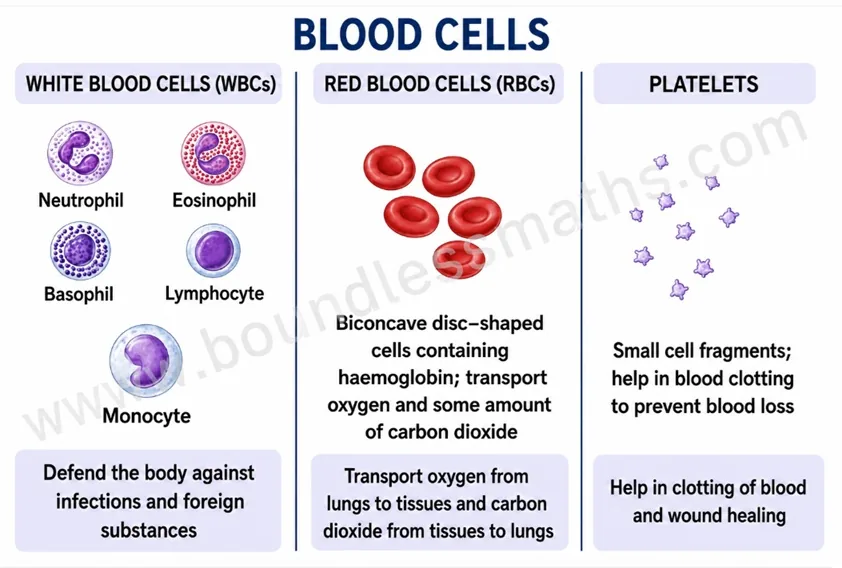
Platelets (thrombocytes) in blood are responsible for clotting. When a blood vessel is injured, platelets rush to the site, clump together, and release chemicals that trigger a cascade of reactions, producing fibrin threads that form a clot (scab) — preventing further blood loss and protecting the wound from infection.
(ii) Skin infection — redness and swellingWhite blood cells (leucocytes) detect the infection and migrate to the area in large numbers to fight the pathogens. They release chemicals that cause blood vessels to dilate (redness) and become leaky (swelling/inflammation). Pus is the accumulation of dead WBCs and bacteria, and fever may occur as the body raises its temperature to fight the pathogens.
(iii) Exercise — faster breathing, red faceDuring exercise, muscles consume more oxygen and produce more CO₂. The brain detects rising CO₂ levels and signals the lungs to breathe faster, taking in more oxygen and expelling CO₂. Blood flow increases to deliver more oxygen to muscles, and blood vessels in the skin dilate to release heat (thermoregulation), making the face appear red (flushed).
| Action | Experience | Function | Connective tissue |
|---|---|---|---|
| Touch your elbow | Hard, rigid structure | Gives strength, support and protection | Bone |
| Press/fold ear or nose | Soft, flexible — retains shape | Provides flexibility; cushions bone ends | Cartilage |
| Touch forearm, wiggle fingers | Feel movement even though fingers are far | Connects muscle to bone; brings about movement | Tendon |
| Move leg up till knee allows | Joint does not go beyond a limit | Connects bone to bone; stability; prevents dislocation | Ligament |
| Move shoulder in all directions | Free circular movement possible | Ball and socket joint — connects arm to skeleton | Bone + cartilage + ligament |
Average values: bone mass is about 12–15% of body weight for all adults. Muscle mass is about 40–50% for adult males and 30–40% for adult females.
Example calculation: for a body weight of 60 kg — bone weight ≈ 60 × 0.135 = 8.1 kg; muscle weight (male) ≈ 60 × 0.45 = 27 kg.
Why bone and muscle mass differ between individuals:
| Body part | Complete rotation | Partial rotation | Bending | Other movements | Joint type |
|---|---|---|---|---|---|
| Elbow | No | No | Yes | — | Hinge joint |
| Shoulder | Yes (partial in most people) | Yes | Yes | Side-raising, up-down, circular | Ball and socket |
| Knee | No | No | Yes | — | Hinge joint |
| Neck | No | Yes (side to side) | Yes (forward/back) | Turning side to side | Pivot joint |
| Fingers | No | No | Yes | Slight side movement | Hinge joint (knuckles) |
| Toes | No | No | Yes (up/down) | Slight spreading | Hinge/gliding joint |
| Wrist | No | Yes | Yes | Side-to-side, circular | Ellipsoidal/gliding |
Some parts, like the shoulder, allow near-complete rotation — a true 360° is not possible due to anatomical limits, but it remains the most mobile joint. The elbow and knee are hinge joints, moving in one plane only.
Coconut husk fibres — hard and brittle: made of sclerenchyma tissue. Sclerenchyma cells have extremely thick walls due to lignin deposition — a hard polymer that makes wood hard. Most sclerenchyma cells are dead at maturity, and lignin is rigid and non-elastic, making the fibres hard and brittle — they break rather than bend.
Coriander leaf stalks — soft and flexible: contain collenchyma tissue. Collenchyma cells are living, with unevenly thickened corners due to pectin deposition. Pectin gives flexibility — like rubber, it bends without breaking — and these cells also have intercellular spaces and are not lignified, so they stay soft and pliable.
Summary: the difference lies in wall composition — lignin (sclerenchyma) means hard and brittle; pectin (collenchyma) means flexible and soft.
Advantageous for desert plants: desert plants lose water rapidly through transpiration via stomata. A thick, waxy cuticle (made of cutin) on the epidermis is impermeable to water, drastically reducing water loss by evaporation from the leaf surface — preventing desiccation and letting the plant survive in hot, dry conditions with minimal water.
Disadvantageous for underwater plants: aquatic plants are surrounded by water and need to absorb dissolved minerals, oxygen and carbon dioxide directly through their surfaces. A thick waxy cuticle would block this absorption, preventing the plant from taking in what it needs — aquatic plants have thin or no cuticle to allow free exchange of gases and nutrients with the surrounding water.
This illustrates adaptation — the same structural feature can be beneficial or harmful depending on the environment.
Answer: Water movement through xylem against gravity is maintained by the cohesion-tension theory, involving both dead xylem cells and living leaf cells:
Together, transpiration pull (from living leaf cells) + cohesion of water + dead xylem tubes as channels allow water to travel up to the tops of 100-metre tall trees, against gravity.
Answer: Stomata serve multiple critical functions, so their absence would cause:
Overall effect: the plant would be unable to photosynthesise effectively, water transport would fail, and the plant would die — no stomata means no life for the plant under typical conditions.
Some gas exchange does occur through lenticels in the bark of woody stems, but this is far insufficient for the plant's needs.
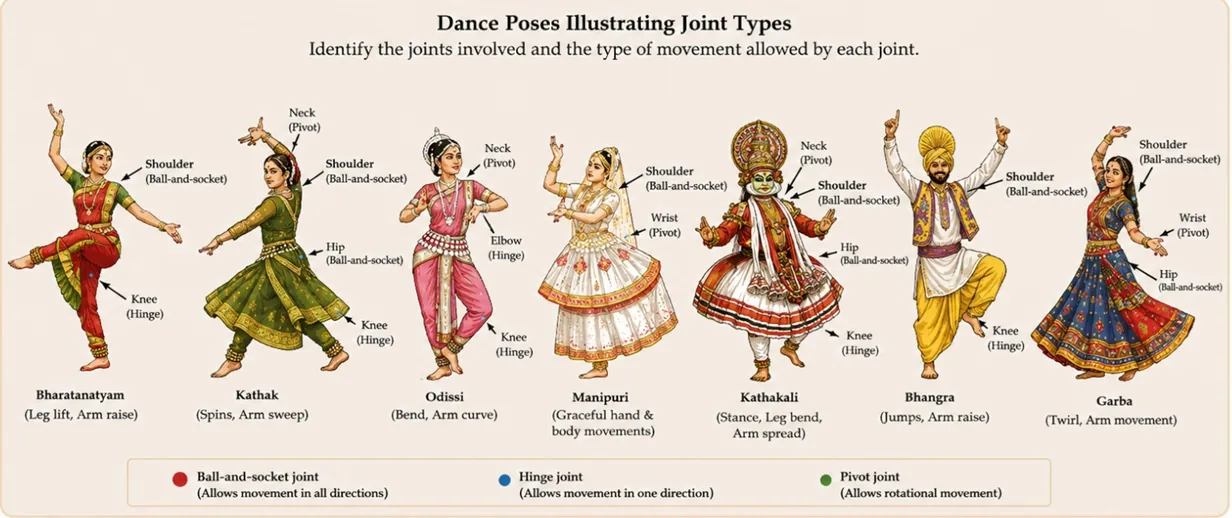
Answer: Classical and folk dance poses involve virtually every joint in the body:
| Joint | Type | Movements in dance |
|---|---|---|
| Shoulder | Ball and socket | Circular, forward, backward, sideways arm swings; full range arm positions |
| Elbow | Hinge | Bending and straightening arms; positions in mudras and gestures |
| Wrist | Ellipsoidal/gliding | Rotation, bending, side-to-side — essential for hand gestures (hastas) |
| Hip | Ball and socket | Wide range: splits, circular swings, lateral movements, forward/backward bends |
| Knee | Hinge | Bending and straightening; deep knee bends (demi-plié positions in Bharatanatyam) |
| Ankle | Hinge + gliding | Pointing, flexing, rotating feet — crucial for footwork in Kathak, Bharatanatyam |
| Neck | Pivot | Side-to-side, forward/back tilts — characteristic neck movements in classical dance |
| Spine/vertebral column | Multiple joints | Bending forward, backward (arching), side bends, twisting — gives grace to posture |
Dance forms like Bharatanatyam, Kathak, Manipuri and Odissi use the full range of human joint mobility. The extreme poses require high flexibility from cartilage, ligaments and well-trained muscles.
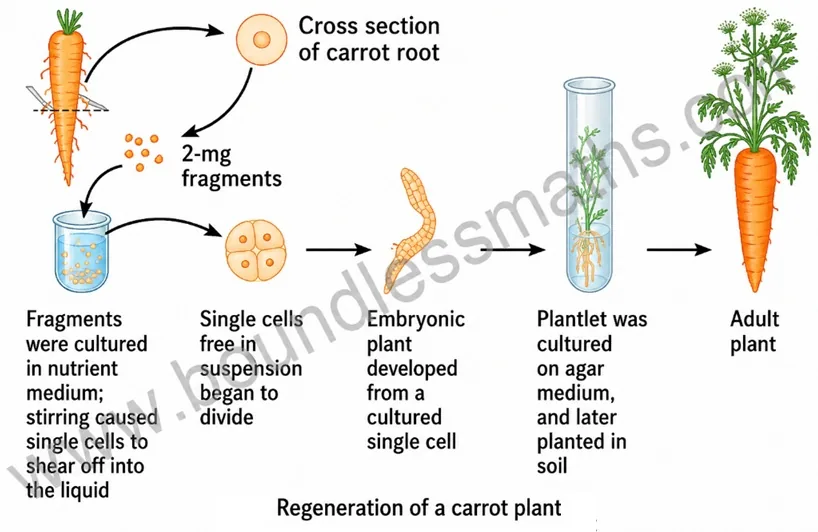
Answer: From Steward's experiment, the following conclusions can be drawn about carrot phloem cells:
From Table 3.6 — highest biomass: Combination 2 — light ✓, air ✓, liquid medium + nutrients → 20% increase. Both light and air are present, enabling photosynthesis (light + CO₂ from air → glucose). The liquid medium lets cells remain freely suspended and access nutrients evenly, and stirring causes single cells to shear off, increasing surface area for nutrient absorption — photosynthesis plus supplied nutrients together maximise energy and raw materials for cell division and growth.
Lowest biomass: Combinations 1 and 3 both show reduced biomass. Combination 1 (light ✓, no air, solid medium) has no air, so no CO₂ for photosynthesis despite light being present, and the solid medium restricts cell movement and nutrient access. Combination 3 (no light, air ✓, liquid medium) has no light, so no photosynthesis even though CO₂ is available — without photosynthesis, cells must rely entirely on supplied nutrients and cell metabolism slows.
Both light and air are needed for photosynthesis — without either, cells cannot generate energy from light, so growth is reduced even when nutrients are supplied.
Answer: No, you will not get the same results. Key differences:
Conclusion: animal cells cannot regenerate a complete organism from a single differentiated cell — this is the key advantage of plant totipotency over animal cell biology.
Application 1 — Micropropagation for agriculture: thousands of genetically identical, disease-free plants can be produced from a single plant cell or small tissue fragment in a short time. Used for banana, orchid, potato, sugarcane and strawberry mass production, conservation of endangered plant species, and propagation of elite/high-yielding crop varieties that are difficult to propagate by seeds.
Application 2 — Production of disease-free and improved crops: plants infected with viruses can be treated to obtain virus-free clones through meristem culture. Through somaclonal variation (genetic variation arising in tissue culture), improved varieties with drought resistance, pest resistance, or higher nutritional content can be selected — genetic engineering using Agrobacterium as a vector is also made possible through tissue culture techniques.
Production of secondary metabolites (drugs, fragrances) from plant cells in bioreactors, germplasm conservation (long-term storage of plant genetic material), and anther culture to produce haploid plants for breeding programmes.
Answer: The correct option is they have thin walls, dense cytoplasm and a large prominent nucleus. Meristematic cells must divide rapidly and continuously. Thin cell walls allow easy cell-plate formation during division; dense cytoplasm packed with organelles (ribosomes, mitochondria) provides the energy and materials for division; and a large, prominent nucleus contains the genetic information needed for replication. Thick walls, large vacuoles, and being differentiated are all properties of permanent tissues, not meristematic ones.
Answer: Phloem. Phloem transports food (sugars, amino acids) made in leaves by photosynthesis to all other parts of the plant, including roots, flowers and fruits — a process called translocation. Xylem transports water and minerals upward from roots, epidermis is a protective tissue, and sclerenchyma is a supporting tissue — only phloem handles food transport from source (leaves) to sink (roots, growing parts).
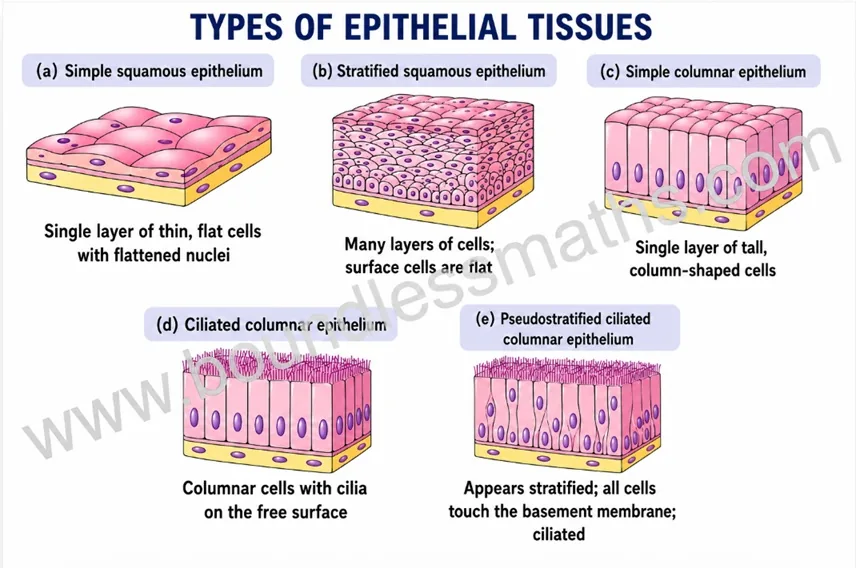
Answer: To allow quick exchange of materials across them. Epithelial tissues lining blood vessels (squamous epithelium) and lung alveoli need to allow rapid diffusion of O₂, CO₂, nutrients and waste products. A thin layer means materials only need to cross a very short distance, making exchange faster and more efficient — the rate of diffusion is inversely proportional to distance. Multiple cell layers (as in skin) would slow down exchange drastically, and are used only where protection, not exchange, is the primary need.
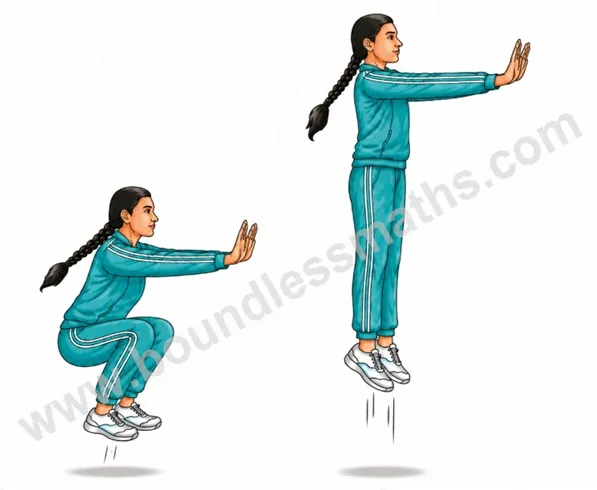
Straight-leg jump: knees and ankles stay rigid (locked in extended position), and the hips remain relatively straight. On landing, there is no joint flexion to absorb the impact — all landing force is transmitted directly through stiff joints to the skeleton. This feels hard, jarring, and painful, with a high risk of injury (especially to the knees).
Normal jump: on takeoff and landing, knees and ankles flex naturally, and the hips flex slightly too. The joints act as shock absorbers, distributing the impact force progressively through cartilage, tendons and muscles — landing feels soft and controlled.
Key observation: joints (especially hinge joints at the knee and ankle) function as dynamic shock absorbers. Bending them during landing distributes the impact over a longer time and distance, reducing peak stress on bones and joints — the biomechanical principle behind bent-knee landings in sports and gymnastics.
Answer: Hinge joint. Both knees and ankles are hinge joints — they allow movement in one plane only (bending/flexion and straightening/extension), like a door hinge. The knee is one of the largest hinge joints, protected by the kneecap. Ball and socket joints (shoulder, hip) allow multi-directional movement, and pivot joints (neck, elbow-forearm) allow rotational movement.
Assertion: Epithelium is well-suited for gas exchange in the lungs. Reason: it consists of multiple layers of tall cells that slow down diffusion.
Answer: A is true, but R is false. The assertion is correct — squamous (thin, flat) epithelium in the lungs is well-suited for gas exchange. But the reason is false: lung epithelium is a single layer of thin, flat cells (squamous epithelium), not multiple layers of tall cells. Multiple layers would actually hinder diffusion — it's precisely the thinness and single-layer nature that makes it suitable for rapid gas exchange.
Case B — Cardiac muscleAssertion: Cardiac muscle can contract continuously without fatigue. Reason: cardiac muscle cells have a high number of mitochondria and an abundant blood supply.
Answer: Both A and R are true, and R is the correct explanation of A. Cardiac muscle contracts rhythmically for a lifetime without fatigue because cardiac cells are packed with mitochondria (which produce ATP through aerobic respiration), and the heart receives a rich blood supply via the coronary arteries, ensuring continuous delivery of oxygen and glucose.
Case C — TendonsAssertion: Tendons connect bone to bone and allow joint movement. Reason: tendons are made of tough connective tissue that transmits force from muscle to bone.
Answer: A is false, but R is true. The assertion is incorrect — tendons connect muscle to bone (not bone to bone); it is ligaments that connect bone to bone. The reason is true — tendons are indeed tough connective tissue that transmit muscle force to bone.
Case D — Hinge jointsAssertion: In a hinge joint, movement occurs primarily in one plane. Reason: the bone ends are shaped to allow sliding in all directions.
Answer: A is true, but R is false. The assertion is correct — hinge joints (elbow, knee, ankle) move primarily in one plane (flexion/extension). But the reason is false: the bone ends in a hinge joint are shaped to restrict movement to one plane, not to allow sliding in all directions. Ball and socket joints have rounded ends that allow multi-directional movement.
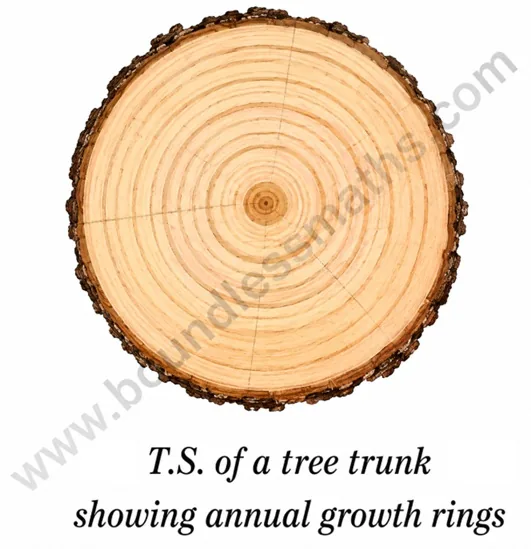
The graph shows the teak tree's diameter increasing steadily with age, in an approximately linear relationship. At age 5, diameter = 4 cm; at age 40, diameter = 40 cm — roughly 1 cm of diameter per year on average, though the growth rate appears to slow slightly in later years (only 4 cm increase from age 20–25, versus 8 cm from age 5–10), possibly due to environmental conditions or competition.
(ii) Relation between diameter and annual ringsThe number of annual rings formed equals the tree's age in years — the diameter and the number of annual rings are directly proportional, since each ring represents one year of lateral (secondary) growth by the lateral meristem. The data shows a 1:1 ratio of age to annual rings, with diameter roughly doubling for every doubling of age in the productive years (8 cm at 10 years, 24 cm at 20 years).
(iii) Tissue responsible for girth, and its locationThe lateral meristem (also called the vascular cambium in secondary growth) is responsible for the increase in girth. It's located along the circumference of the stem, in a ring between the xylem and phloem, and divides to produce new xylem cells inward (forming wood/secondary xylem with annual rings) and new phloem cells outward, increasing the stem's diameter year by year.
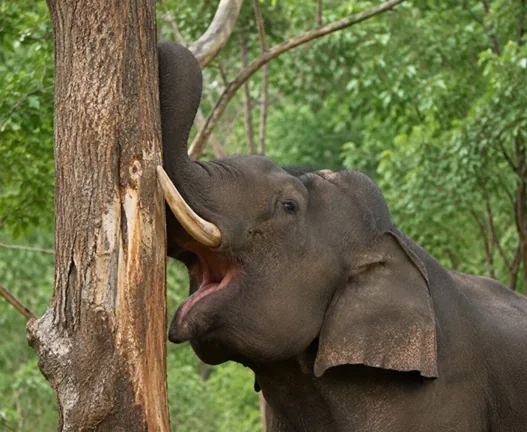
Bark consists of cork (dead protective cells), cork cambium (lateral meristematic cells) and phloem. Debarking removes protection — exposing inner tissues to mechanical damage, desiccation, pathogens, insects, and extreme temperatures — and, if phloem is also removed, food transport, since food synthesised in leaves can no longer reach roots and other parts below the debarked region.
(ii) Plant tissue affected by further damage below barkBelow the bark lies xylem (wood), containing vessels and tracheids for water and mineral transport, and the vascular cambium (lateral meristem) lies just beneath it too. Further damage to the trunk would affect the xylem and cambium, stopping water transport and the tree's ability to grow in girth.
(iii) Function hampered if tissues beneath the bark are damagedIf xylem is damaged, water and mineral transport from roots to leaves is severely compromised — leaves cannot receive water for photosynthesis, leading to wilting, reduced photosynthesis, and eventual death. Damage to the cambium means the tree can no longer produce new xylem or phloem — it cannot heal itself or grow in girth.
(iv) Assumptions, and how the answers would changeAssumptions: the debarking removed both cork and phloem; the tree is a dicot with secondary growth; and debarking was complete around the circumference (ring-barking). If only the cork was removed, food transport continues; a monocot tree would be structured differently (no vascular cambium); and if debarking was only partial, some phloem would remain functional and the tree could survive with reduced function.
Tissue responsible: Collenchyma. Collenchyma cells are living, with unevenly thickened corners due to pectin deposition. Pectin is flexible like rubber, allowing the tissue to bend without snapping. Collenchyma is found in the cortex of young stems and leaf stalks/petioles, providing mechanical support and flexibility at the same time.
Impact if replaced by sclerenchyma: sclerenchyma has thick, lignified cell walls and is made of dead cells. Lignin is rigid and inflexible, so if collenchyma were replaced by sclerenchyma:
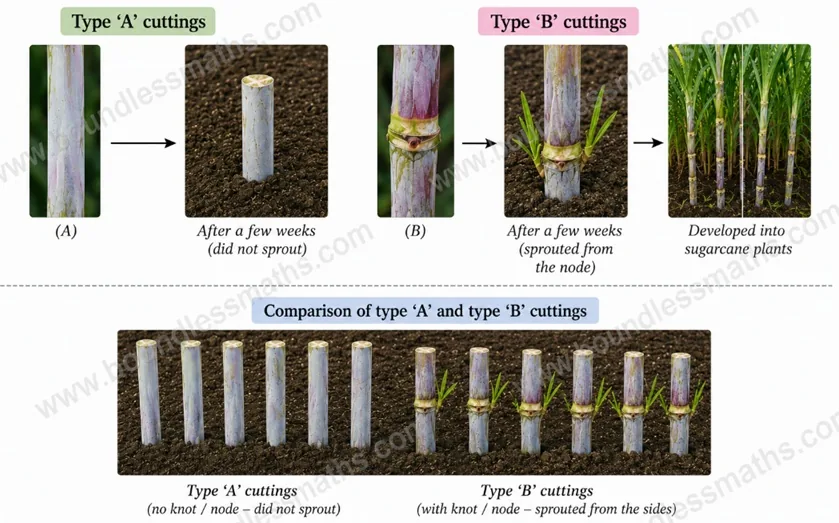
Type B cuttings had nodes (the regions on the stem where buds and leaves arise), while Type A cuttings had only internodes (the regions between nodes). Nodes contain intercalary meristematic tissue and axillary buds — actively dividing cells capable of producing new shoots and roots — while Type A lacked nodes and therefore lacked the meristematic tissue needed to regenerate a new plant.
(ii) Difference between Type B and Type AType B contained at least one node with an intact axillary bud and intercalary meristem. Type A consisted only of internode segments — mature, permanent tissue without meristematic cells. This presence or absence of a node is what determined whether regeneration was possible.
(iii) Observation/measurement usedThe observable measurement was sprouting — whether new shoot growth emerged from the cutting after a few weeks. Additional measurements could include the number of new shoots, their length, root development, and eventual establishment of a new plant.
(iv) Parameters to keep the same for a fair comparisonLength of cutting, number of nodes in Type B cuttings, soil type, watering frequency and amount, temperature and light conditions, and the initial health/age of the cuttings — without keeping these constant, any observed difference could be due to factors other than the presence or absence of a node.
Rohan is partially correct — his definition applies to simple tissues: parenchyma, collenchyma, and sclerenchyma each consist of one type of cell performing one primary function (storage, flexible support, rigid support respectively) — similar cells with a similar function makes a tissue in these cases.
Rajiv is correct for complex tissues: xylem and phloem are complex tissues because they're made of more than one type of cell.
In complex tissues, different types of cells with different structures perform different sub-functions, all contributing to the overall function of the tissue (conduction). A better definition, then, is: a tissue is a group of cells — similar or different in structure — that work together to perform a specific function.
Tissue: Sclerenchyma (specifically phloem fibres — coir fibres from coconut husk). These cells have extremely thick, lignified secondary cell walls, making them hard, rigid, and tensile. Most sclerenchyma cells are dead at maturity — their walls provide the mechanical strength. Lignin resists compression, tension, and microbial decomposition, making it ideal for tough fibrous materials like mats, rope (coir), and coconut fibre products.
Why parenchyma cannot serve the same purpose:
Vibha's statement is incorrect. Meristematic tissues are found in three locations:
Question Neha can ask Vibha: "If meristematic cells are only at root and shoot tips, then how does the stem of a tree increase in thickness (girth) over the years? And when grass is mowed, it grows back quickly — where are the meristematic cells that allow this, since the tips are cut off?" These questions would guide Vibha to discover lateral and intercalary meristems respectively.
(i) The plant cell will have a larger vacuole. In mature plant cells, the central vacuole typically occupies 50–90% of the cell's volume, filled with cell sap — it stores water, minerals, pigments (anthocyanins giving flower colour), and waste materials, and maintains turgor pressure. Animal cells have small or no permanent vacuoles — only tiny, temporary vacuoles for food digestion (food vacuoles) or waste expulsion (contractile vacuoles in protists).
(ii) Assumptions made: (a) the plant cell is a mature leaf or storage cell, not a meristematic cell (which also lacks a large vacuole); (b) the animal cell is a typical somatic cell, not a fat cell/adipocyte, whose large lipid droplet could be comparable in size; and (c) both cells are in a healthy, turgid state. If these assumptions change — a meristematic plant cell might have a smaller vacuole than an animal cell, and an adipocyte might have a larger "vacuole-like" lipid droplet than a typical plant cell.
Answer: This statement is an oversimplification. Critical questions to examine it:
Tissue examples that disprove the statement:
Conclusion: the textbook statement is an oversimplification. Many plant tissues, especially parenchyma and epidermis, perform multiple functions. A more accurate statement would be: "Each plant tissue has a primary specialised function, but may also contribute to secondary functions depending on its location and context."
Current status: a complete animal cannot yet be regenerated from a single differentiated animal cell the way plants can, due to fundamental differences in animal cell biology — though recent advances in stem cell biology and cloning show this may become partially possible.
What IS currently possible:
Advantages if possible: regenerative medicine — growing replacement organs from a patient's own cells, eliminating transplant rejection; producing genetically identical animals for research and conservation of endangered species; understanding developmental biology; and treating genetic diseases by replacing defective cells with corrected ones.
Challenges:
While plants achieve this naturally through totipotency, animals are fundamentally different. Progress through iPSCs and SCNT is promising, but full regeneration of a complete animal from a somatic cell remains a future challenge — both scientifically and ethically.
Tissues are cells organised for a shared purpose — meristematic tissue makes plant growth possible, permanent tissues give plants their structure and transport systems, and in animals the four fundamental tissue types (epithelial, connective, muscular, nervous) work together at every level from cell to organ system, all while plant cells retain a special ability — totipotency — that most animal cells have lost.
Here are extra practice questions for Class 9 Chapter 3, Tissues in Action. It is a mix of MCQs, Assertion-Reason, Very Short, and Short Answer Questions, and Long Answer Questions — apart from the NCERT questions — to make you confident in your understanding of the chapter. Attempt the questions yourself first, and then cross-check your answers below.
Answer: (b) Meristematic tissue — its cells divide continuously and are concentrated at the growing regions of the plant (root tips, shoot tips, and cambium), driving increase in length and girth.
Answer: (b) Phloem — it transports food (sugars made during photosynthesis) from the leaves to all other parts of the plant, in both upward and downward directions.
Answer: (b) Tendon — a tough, fibrous, only slightly elastic connective tissue that anchors muscle to bone, allowing muscle contraction to move the skeleton.
Answer: (c) Cardiac muscle — branched, striated, involuntary muscle unique to the heart, capable of contracting rhythmically and continuously throughout life without fatiguing.
Answer: (b) Pivot joint — found between the skull and the first vertebra (atlas), it allows the rotational movement that lets you turn your head side to side.
For each question, the Assertion (A) and Reason (R) are given. State whether each is true or false, and whether the Reason correctly explains the Assertion.
Answer: Both the Assertion and the Reason are true, and the Reason correctly explains the Assertion — meristematic cells are actively and continuously dividing, and it is precisely this continuous division that produces new cells and drives the plant's growth.
Answer: Both the Assertion and the Reason are true individually, but the Reason does not correctly explain the Assertion. Cardiac muscle resists fatigue because of its rich, continuous blood (and therefore oxygen) supply and its specialised structure (branched fibres joined by intercalated discs) — not simply because it happens to work continuously. In fact, "working continuously" on its own would normally be expected to cause fatigue, not prevent it, so the Reason doesn't logically explain the Assertion.
Answer: Both the Assertion and the Reason are true, and the Reason correctly explains the Assertion — vessels and tracheids are the hollow, tube-like, dead cells within xylem tissue that actually conduct water and minerals upward from the roots.
Answer: Both the Assertion and the Reason are true individually, but the Reason does not correctly explain the Assertion. Ligaments are elastic because of the composition of their fibres (a mix of collagen and elastic fibres), not simply because their job is to connect bone to bone — connecting two bones doesn't by itself require elasticity (compare this with fixed/fibrous joints, which connect bones rigidly with no elasticity at all).
Answer: Both the Assertion and the Reason are true, and the Reason correctly explains the Assertion — stomata are pores that open and close to allow gases (CO₂ and O₂) to move in and out of the leaf; water vapour escapes through these same open pores, which is exactly what causes transpiration.
Answer: A tissue is a group of similar cells, working together in an organised way, that perform a specific function.
Answer: Meristematic tissue is made up of actively and continuously dividing cells, found at the growing regions of a plant (such as root tips and shoot tips), and is responsible for the plant's growth in length and girth.
Answer: Stomata are small pores, mainly on the lower surface of leaves, that open and close to allow the exchange of gases (CO₂ and O₂) needed for photosynthesis and respiration, and also allow water vapour to escape during transpiration.
Answer: Tendons are tough, fibrous connective tissues, only slightly elastic, that connect muscles to bones.
Answer: Cartilage is a smooth, flexible connective tissue that cushions and supports joints and structures such as the nose and outer ear, and is more flexible than bone, though still firm.
Answer: Plant tissues are mostly simple, made of one type of cell, and many are permanent (non-dividing) with rigid or dead supporting cells (such as xylem) suited to slow, continuous growth. Animal tissues are mostly complex, made of several different cell types working together, and remain living and active throughout — better suited to rapid movement, repair, and response.
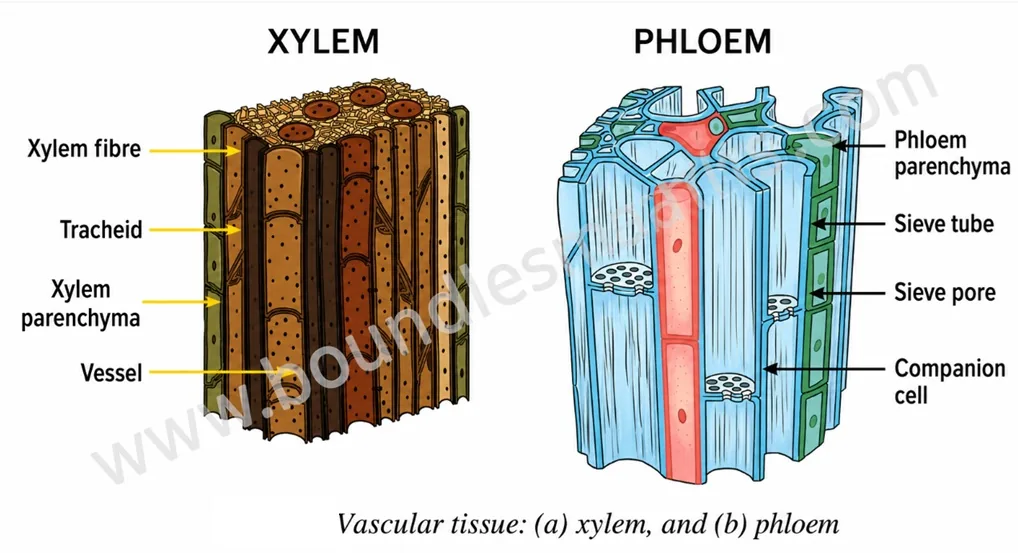
Answer: Tendons connect muscle to bone and are tough with only slight elasticity, allowing muscle contraction to pull on and move bones. Ligaments connect bone to bone at joints and are more elastic, allowing a joint some flexibility of movement while still holding the bones together.
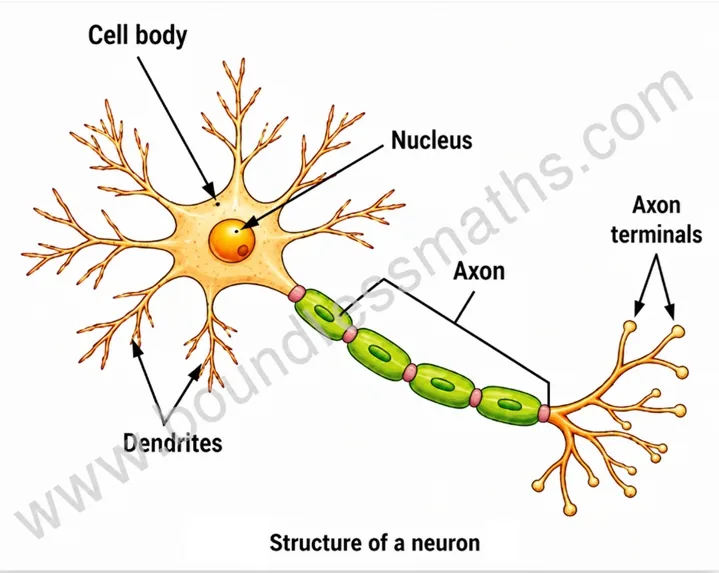
Structure: A neuron has a cell body (containing the nucleus), several short, branched dendrites that receive signals, and one long axon that carries signals away to the next neuron, muscle, or gland.
Function: Neurons receive, conduct, and transmit electrical and chemical nerve impulses, allowing different parts of the body to communicate and coordinate with each other.
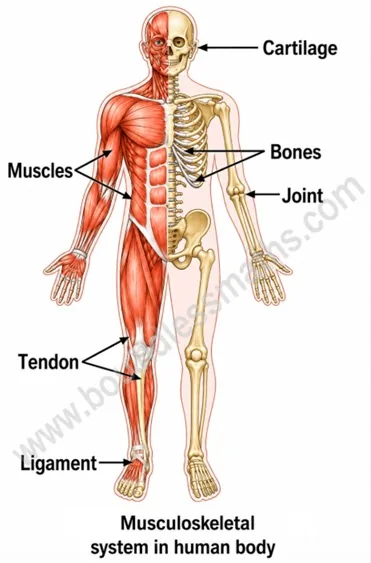
Answer: The skeletal system gives the body its shape and structural support, protects delicate internal organs (the skull protects the brain, the ribcage protects the heart and lungs), works together with muscles to enable movement, and — in the bone marrow of certain bones — produces blood cells.
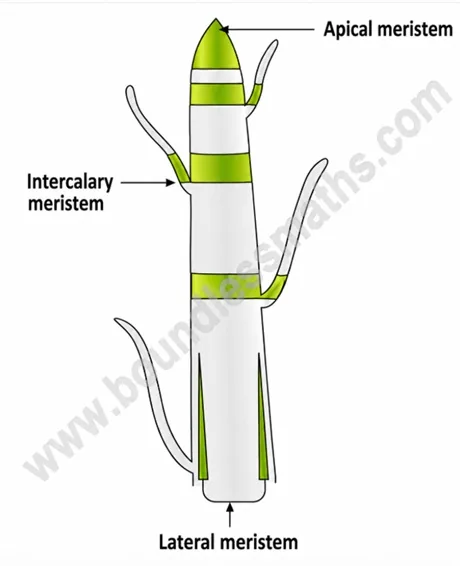
Answer: Meristematic tissue is made up of small, thin-walled cells with dense cytoplasm and little or no vacuole, which divide actively and continuously to produce new cells. It is responsible for growth in plants, and is classified by its position:
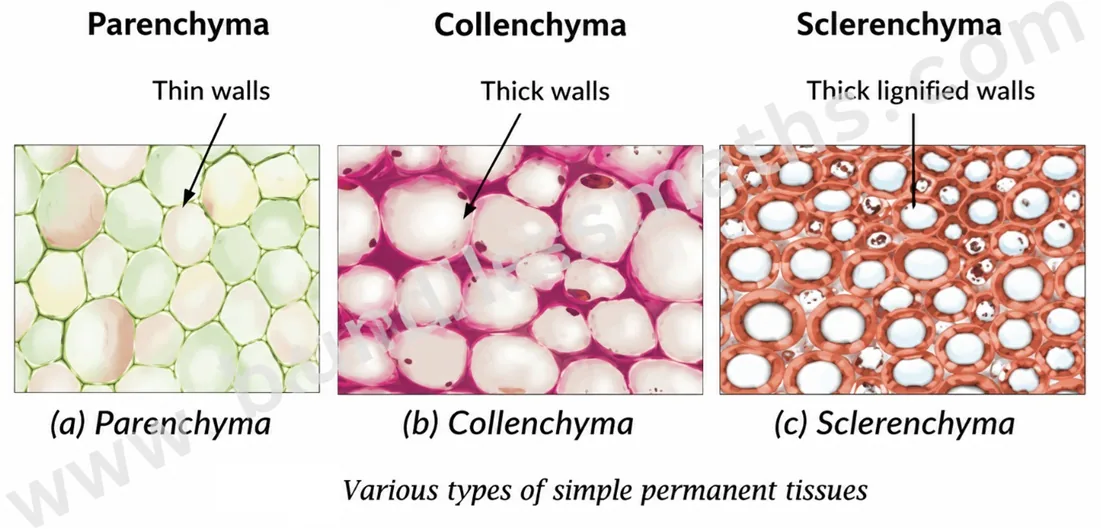
Answer: Simple permanent tissues are made of only one type of cell, and their cells have lost the ability to divide further. There are three types:
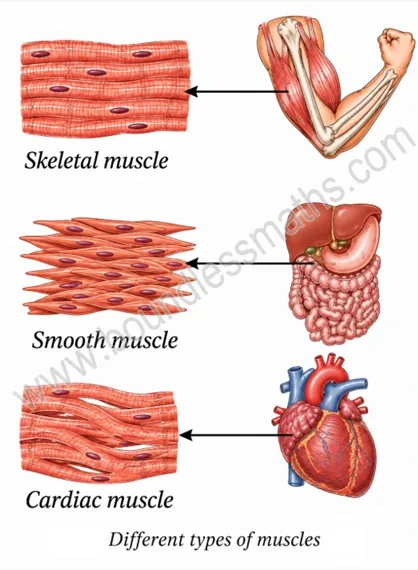
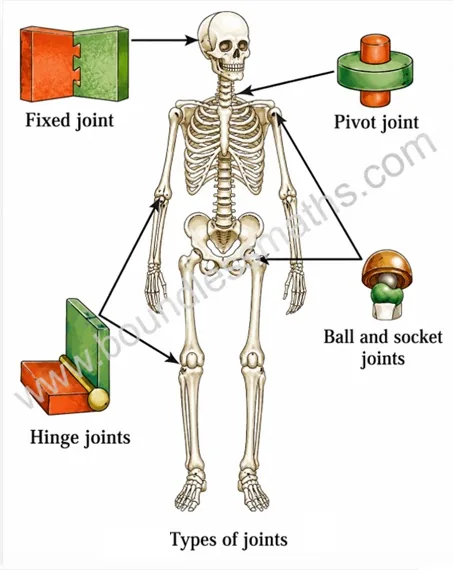
Answer: A joint is a point where two or more bones meet. Different joints allow different kinds of movement:
Answer: Connective tissues connect, support, and bind other tissues and organs of the body together. They include:
Their importance lies in providing the body's structural framework, enabling movement in coordination with muscles, protecting delicate organs, transporting materials via blood, and repairing tissue damage.
Next up is Chapter 4 — Describing Motion Around Us. Or explore the full chapter list, browse the Class 9 Science hub, or book a free demo class for personalised coaching.
 Expert CBSE Coaching · Class 9–12
🥊 Festive Offer · Ends 25 Sep
Expert CBSE Coaching · Class 9–12
🥊 Festive Offer · Ends 25 Sep